Understand production conditions before disruptions occur.
In industrial buildings, machine heat, dust, shift work and different work zones come together. Nebatic can monitor suitable environmental parameters and make trends visible for good working conditions, energy planning and maintenance – without replacing safety-related measuring or control systems.
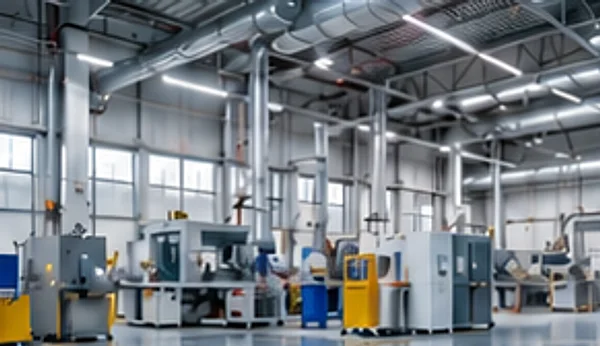
One plant, many climates
Conditions across an industrial site vary widely, and an average for the whole building hides that.
- Production hall
Heat builds up under the roof, while cold air flows in at floor level every time a roller door opens. Measuring points at working height show what actually reaches the workstations – often something different on the night shift than during the day.
- Workshop
Machines with high waste heat and assembly stations have conditions of their own. Trends across several shifts help adjust ventilation and heating to the actual load.
- Office
The office and admin wing is often supplied by the same system as production, but has different working hours and needs. Separate measuring points show whether the two fit together.
- Welfare rooms
Changing rooms, break rooms and washrooms are busy at shift changes and hardly used in between. Lingering damp and stale air show up here particularly quickly.
- Warehouse
In the materials store, swings in temperature and humidity matter, and for some goods they affect quality. Nebatic documents these swings, as far as the sensors used are suitable for the purpose.
Where the plant's energy and maintenance teams can act
Measure, analyse, connect, build further
The starting point is always the technology already running in the plant, from hall heating to meters.
- Devices & platform
Sensors in hall zones, storage areas and the office and welfare wing give maintenance and energy management ongoing data and show where building services deviate from expected behaviour.
Learn more - Audit & analysis
Before new hall heating, a roof refurbishment or a change to the shift model, an audit measures how temperatures and consumption behave today – with a comparison after the work if you wish.
Learn more - API & Integration
Through APIs, room and consumption data goes straight into your energy management or ESG system, with no extra tool to maintain.
Learn more - Custom AI & IoT solutions
Together with your maintenance team, we develop IoT and AI approaches that bring together data from hall systems and existing meters and reveal patterns that may point to wear or incorrect settings.
Learn more