Experience Nebatic in action – from measurement to impact
See how your spaces and buildings become healthier and more efficient through precise sensor technology, intelligent analysis, and smart control.
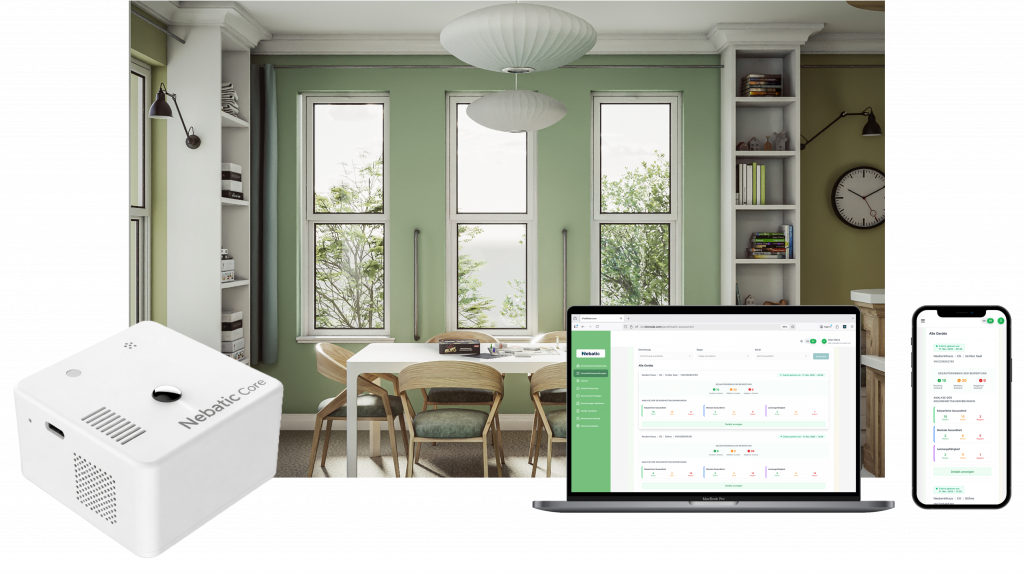
Available across platforms
Use Nebatic in your browser, on iOS, or on Android—flexible, location-independent, and ready for use at any time.
Web
Full functionality directly in the browser—no installation required. Ideal for workstations, teams, and large displays.
iOS
Access all features via the app on your iPhone or iPad—convenient, secure, and always available.
Android
Optimized for all common Android devices, offering intuitive usability, stable performance, and full functionality.
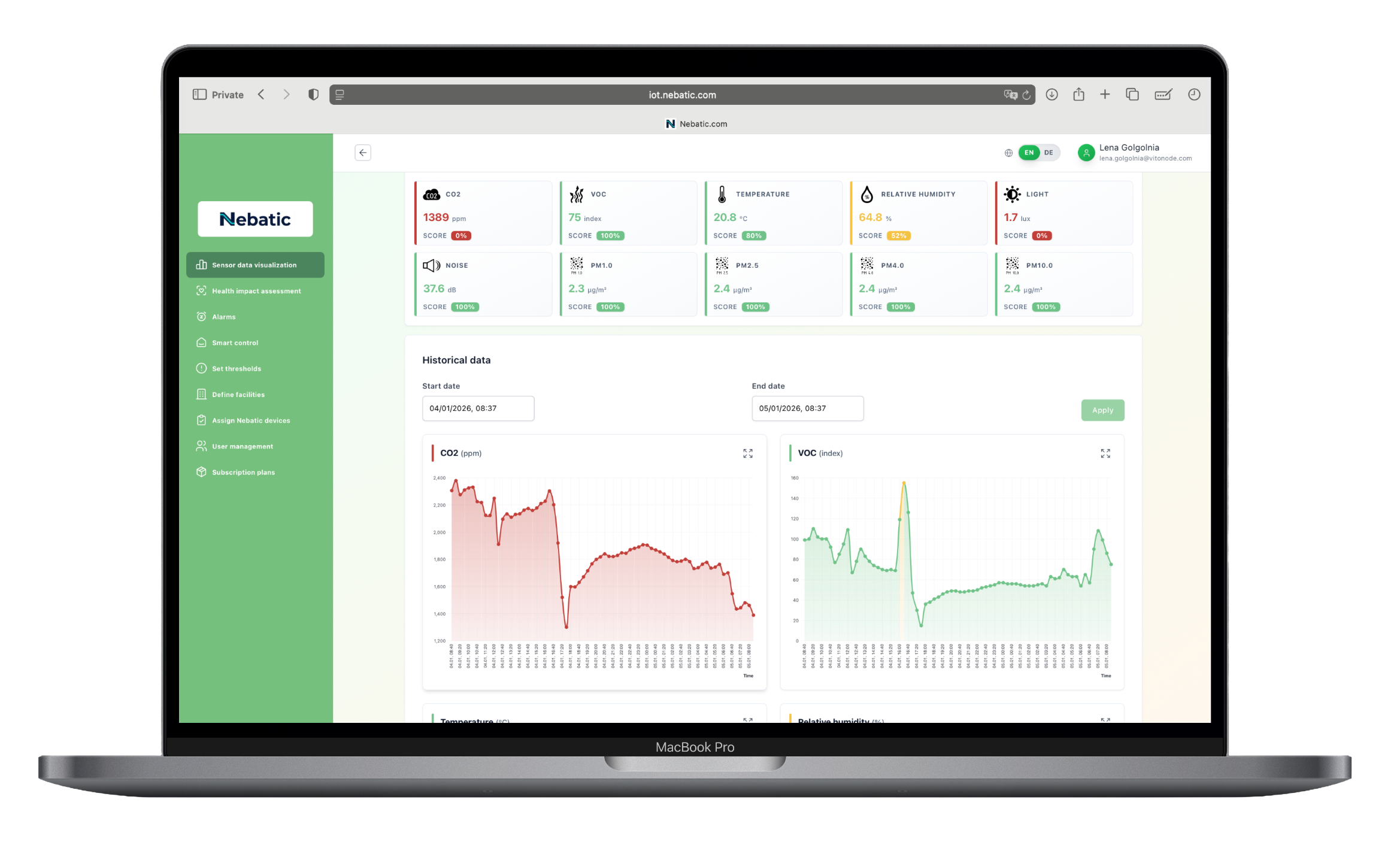
Live overview of all room conditions
Keep your environment under control at all times—with clearly structured, color-coded real-time values from all your rooms. The view is available both as a compact card overview and as detailed individual views. The structured presentation enables fast and well-informed assessment of the current situation.
- Color coding for safe, critical, and borderline conditions
- Real-time data without delay—available on all devices
- Flexible filtering by location, floor, or room
Algorithmic and scientifically grounded assessment of health and well-being
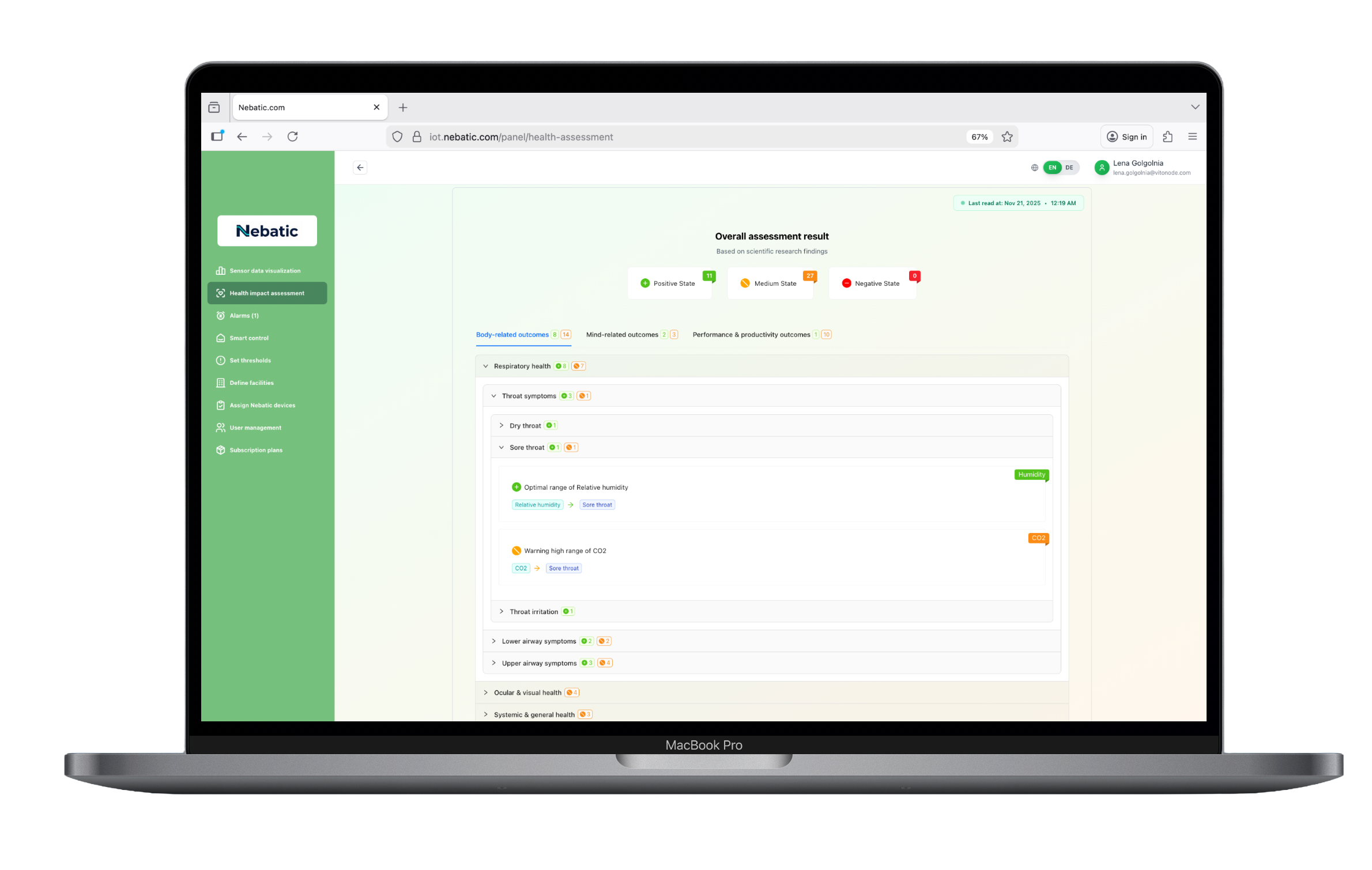
Nebatic applies algorithmic models for context-based evaluation of health and well-being—whether in care facilities, workplaces, schools, or residential spaces. Indoor environmental quality is scientifically assessed with regard to the effects of air quality, light, and acoustics on various health and well-being criteria. This makes it transparent which health aspects are affected by which influencing factors and how these change in real time.
- Tailored models for different room types
- Holistic assessment of health criteria
- Real-time root-cause analysis of health-relevant factors
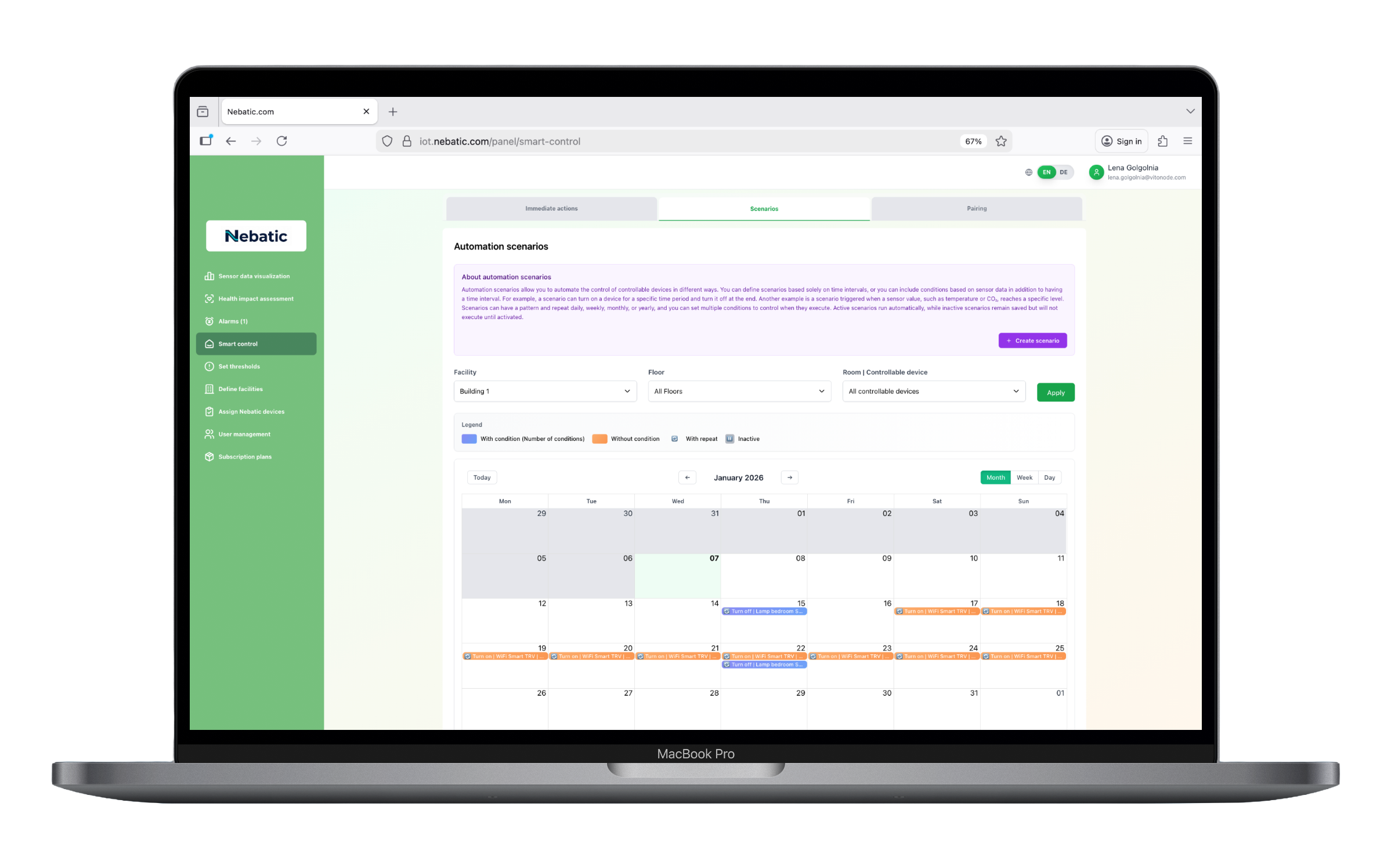
Intelligent control aligned with your existing infrastructure and needs
Nebatic not only monitors and analyzes room variables, but also enables targeted control of connected devices within the space. Actions can be triggered automatically—based on thresholds, state patterns, or scenarios—or manually by users directly from the platform. This allows comfort, air quality, and energy consumption to be regulated according to the situation without interrupting ongoing operations. In addition, Nebatic supports multiple communication protocols and devices from different manufacturers.
- Automatic, scenario-based control depending on thresholds, time windows, or usage scenarios
- Manual immediate control directly from the platform, e.g. switching devices on/off or adjusting performance levels
- Support for multiple protocols and manufacturer devices for high interoperability
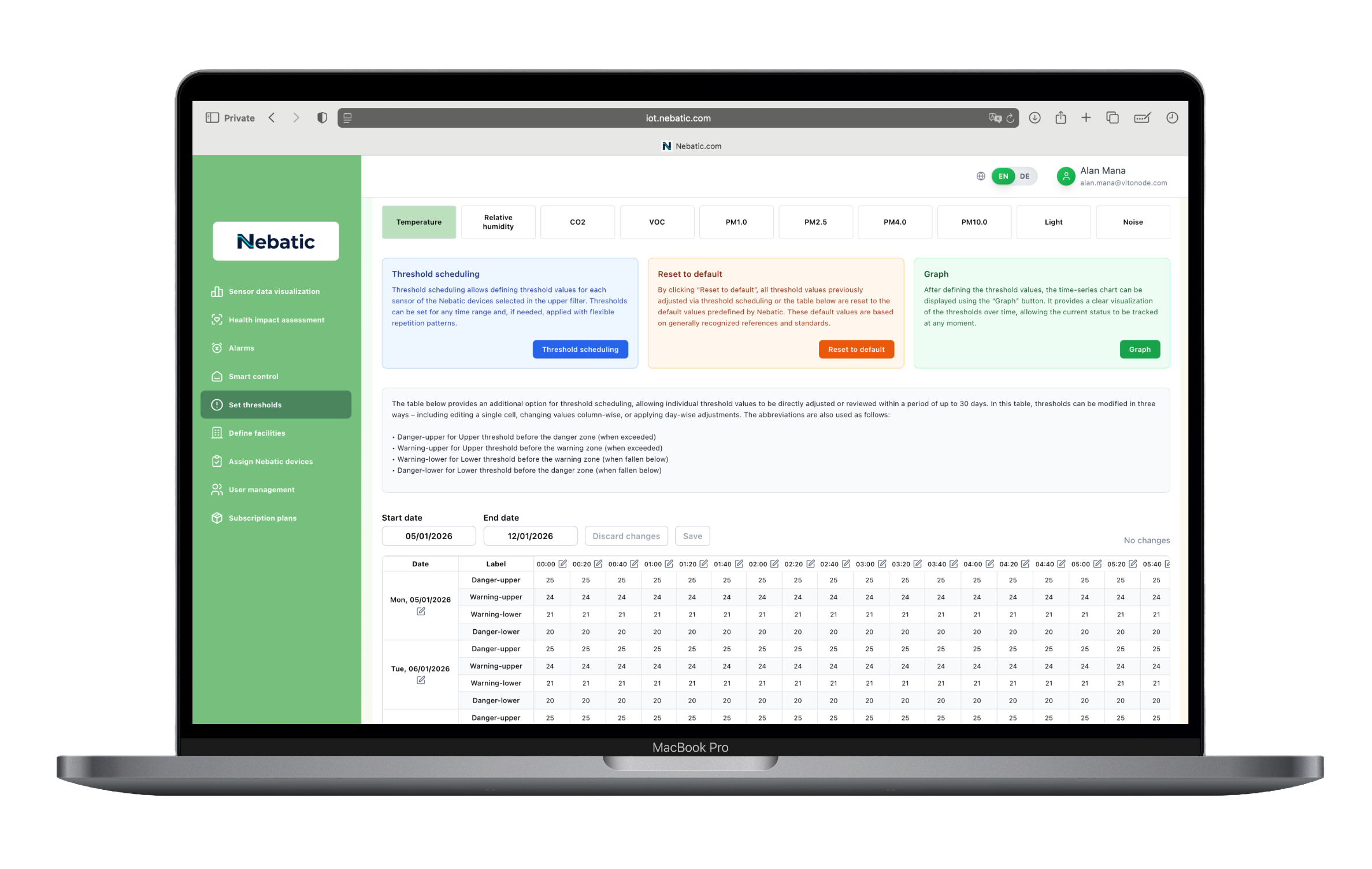
Context- and time-dependent thresholds for individual variables
Every room is different—therefore, Nebatic allows thresholds for all variables to be defined individually. In addition, preconfigured standard thresholds based on proven reference ranges are available and can be used directly or flexibly adjusted. Thresholds can also be defined with time dependency and fine temporal granularity. This ensures context-sensitive evaluation and keeps environments within optimal conditions.
- Custom thresholds per room and per measured variable
- Adaptable to specific usage contexts (e.g. school, care, office)
- Immediate visual highlighting of deviations and patterns over time
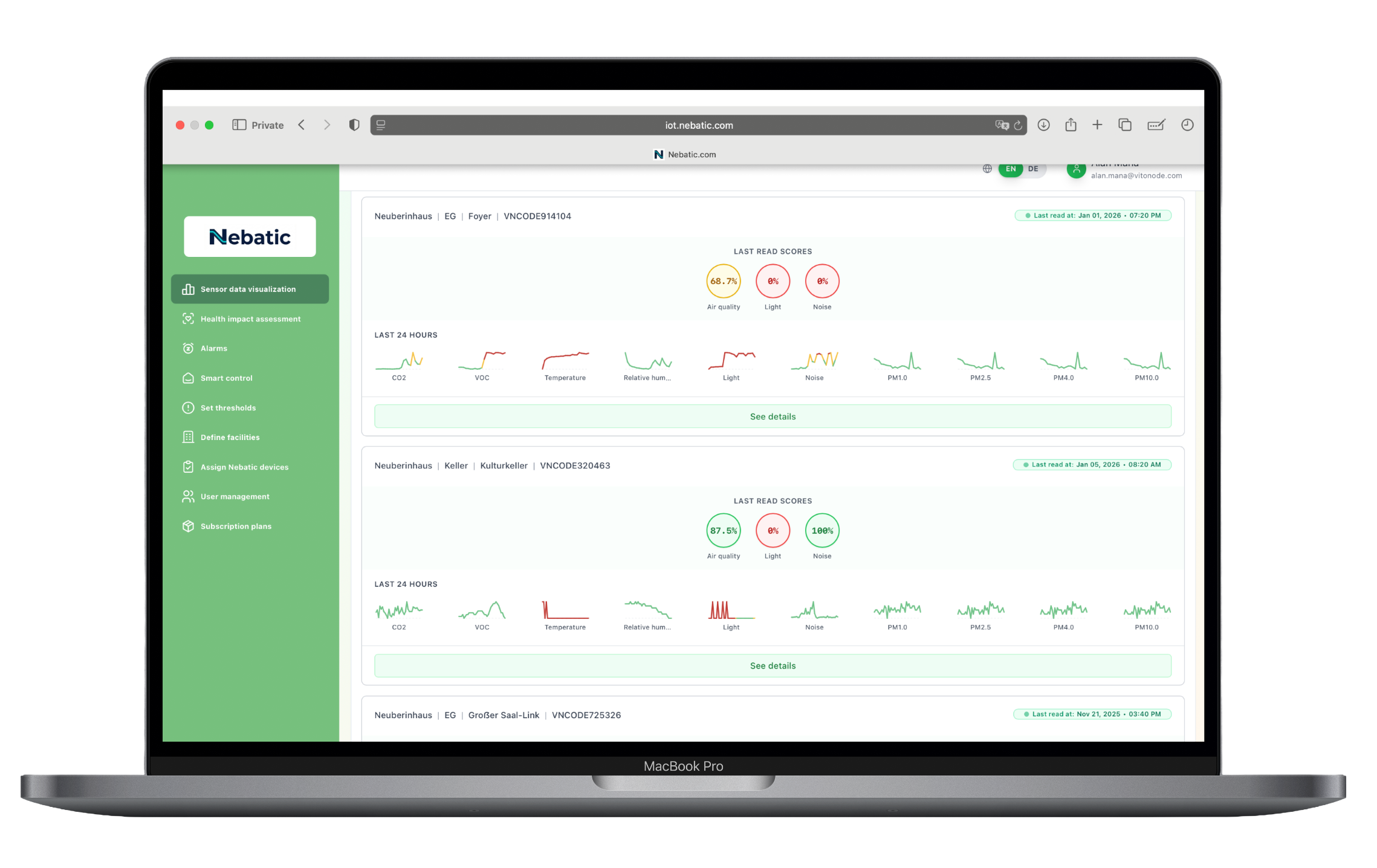
Scalable multi-room monitoring from single rooms to full portfolios
Monitor all rooms simultaneously—with a centralized overview of measurements, alerts, and room states. The system scales from single-room setups to multi-zone buildings and complex structures, extending flexibly to full portfolio management.
- Overview of all rooms and floors in a single view
- At-a-glance comparison of room conditions
- Simultaneous management of multiple devices and locations
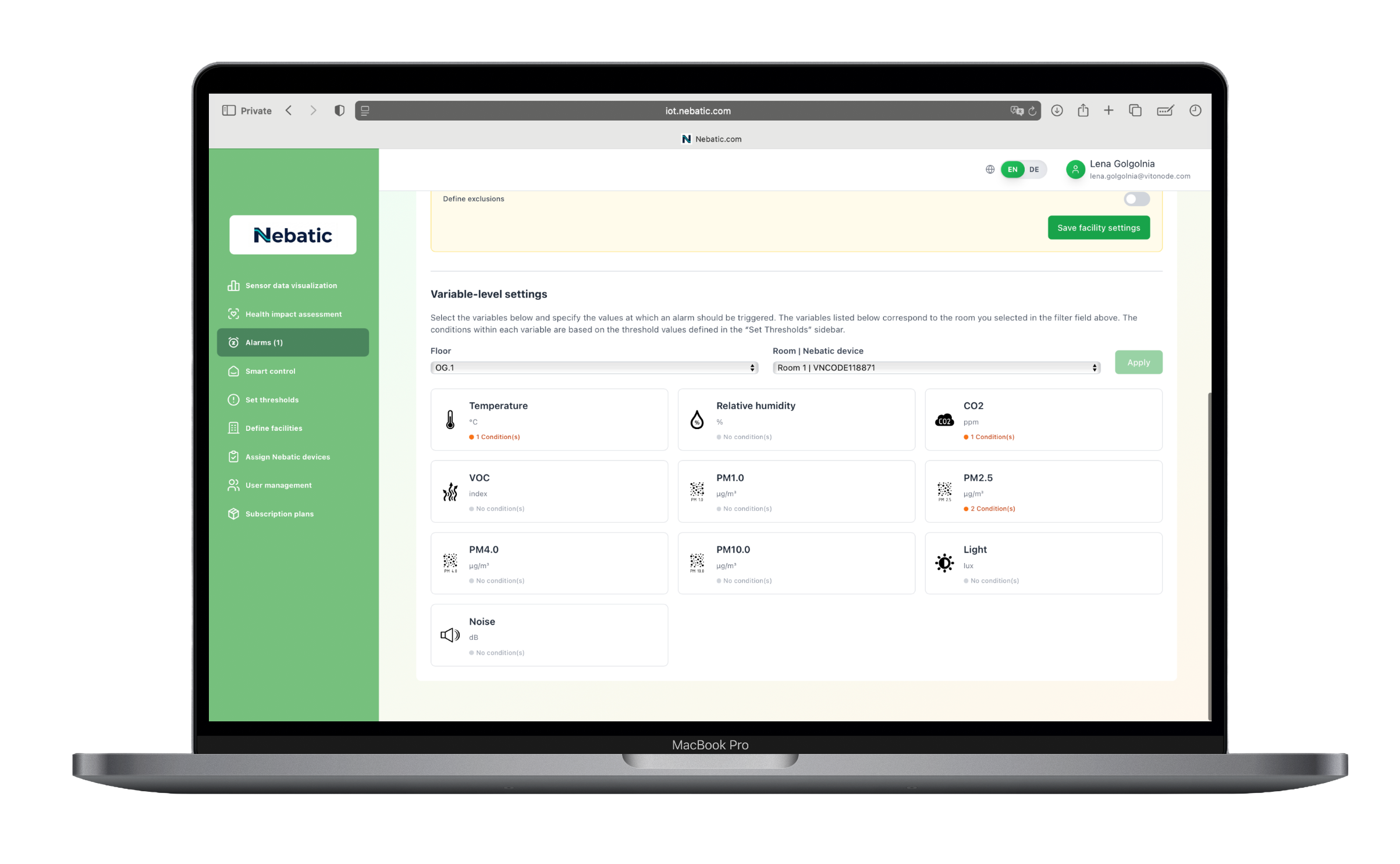
Targeted alerting by time, usage, and severity for each variable
Nebatic reliably detects and notifies you as soon as defined thresholds are exceeded or patterns are identified—either directly within the system or via email. Alert logic can be configured individually for each variable based on time and usage, ensuring notifications are triggered only during desired periods and without unnecessary disturbances. Thresholds can be defined across different severity levels, enabling targeted alerts depending on the degree of deviation.
- Flexibly configurable thresholds for individual variables
- Time-window and usage-based configuration for disturbance-free alerting
- Log of all triggered notifications for traceability and documentation
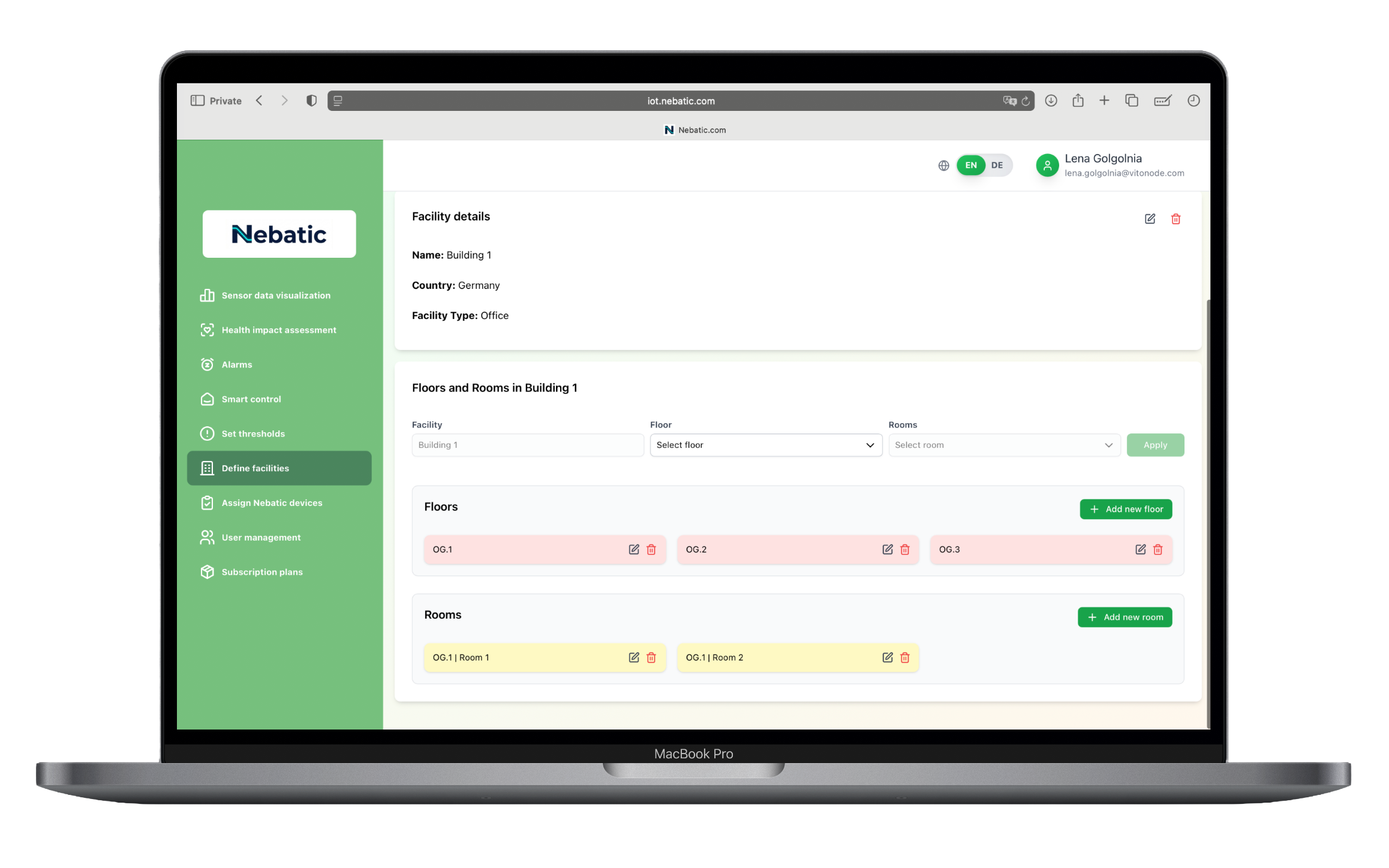
Structured representation of building hierarchies and precise device assignment
Nebatic enables precise assignment of devices along the real building structure—by buildings, floors, individual rooms, and usage areas. The complete building structure can be mapped within Nebatic, ensuring devices are assigned exactly to their actual locations. This provides continuous oversight and enables clear, transparent, and efficient infrastructure organization.
- Flexible mapping of building structures by building, floor, and room
- Precise device assignment to defined rooms and usage areas
- Clear management even across multiple areas and locations
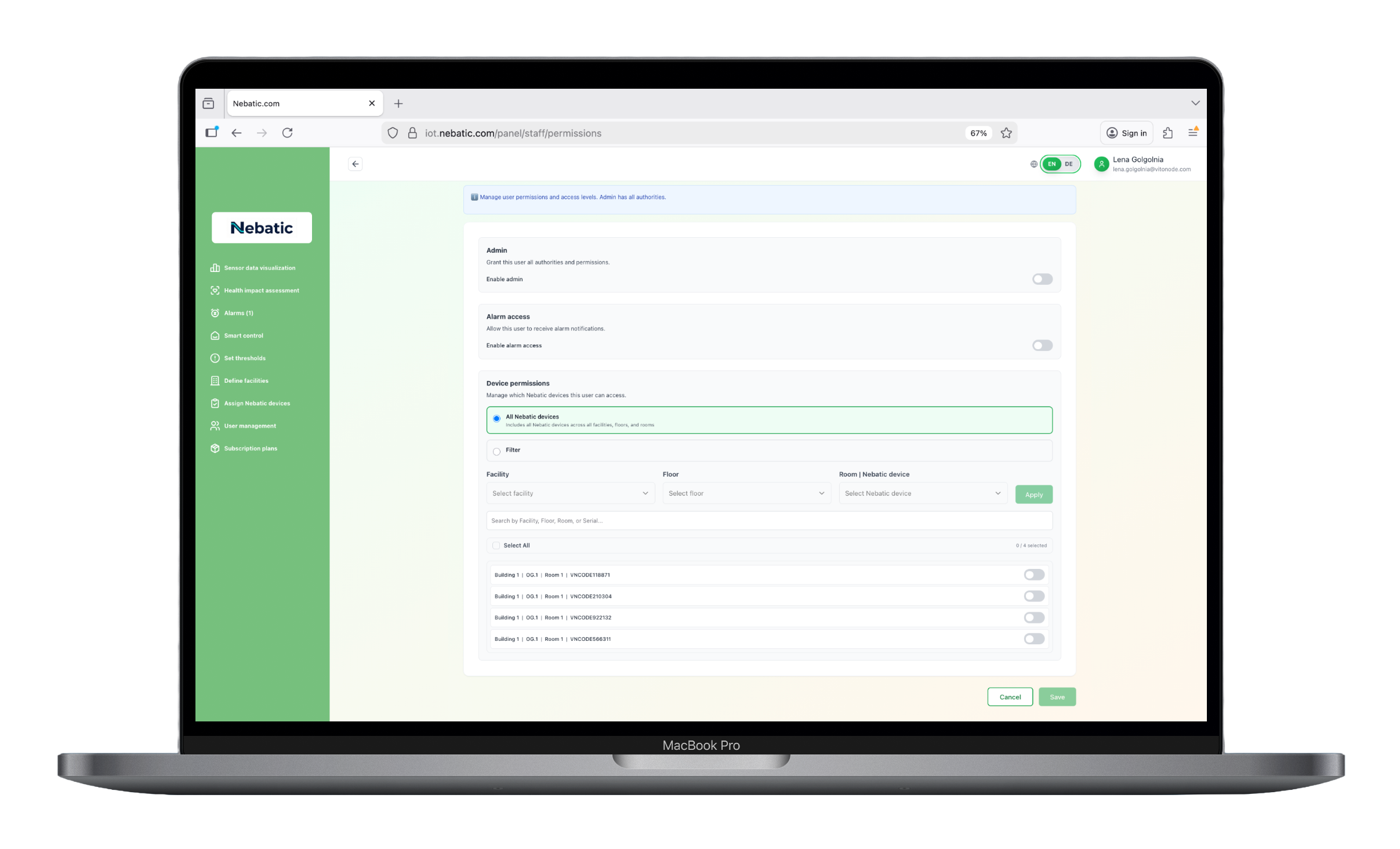
Role-based and targeted user and permission management
User management in Nebatic follows a clearly structured system of defined roles and permission levels. Access rights can be assigned specifically per user, role, or organizational unit—down to individual rooms, devices, or locations. This ensures clear responsibilities and secure, efficient collaboration.
- Granular permissions with access rights down to location, room, and device level
- Flexible role system with predefined or individually configurable roles
- Secure collaboration through targeted access for internal and external users